A marketplace listing is a lead, not a verified supplier record. Screen the legal entity, production site, product specification and payment beneficiary separately; an account badge or response rate cannot establish all four.
The channels below can help build a supplier shortlist outside large marketplaces. Each produces a different kind of lead; record where the lead came from and what still needs independent confirmation.
Domestic wholesale platforms
A domestic listing may quote a different quantity, grade, tax basis, delivery point or service package from an international listing. Request comparable written quotations before concluding that either channel is cheaper. Check export packing, documentation and payment charges separately.
Check export readiness explicitly. Ask who will act as the exporter, which destination-specific labels and documents can be supplied, and whether the quoted price includes those tasks. Obtain the specification in a language both parties can confirm rather than relying on machine translation alone.
Use this channel for price discovery and for finding factories in a category you do not yet understand. Do not use it as your only channel if your product needs certification, custom packaging, or export documents.
Industrial clusters
Category-specific industrial clusters can help identify manufacturers, component suppliers and tooling services. Research the relevant production locations and ask each candidate to disclose its actual manufacturing site.
Searching by production location adds a useful screening route to keyword searches. A supplier located elsewhere may manufacture independently, subcontract or trade; confirm the arrangement rather than inferring it from the address. Ask how production and rework will be coordinated.
Allow time to collect comparable specifications, check registration, review samples and arrange a visit if needed. Agree a shortlist deadline based on the category and the verification work; there is no universal one-week screening period.
Trade fairs
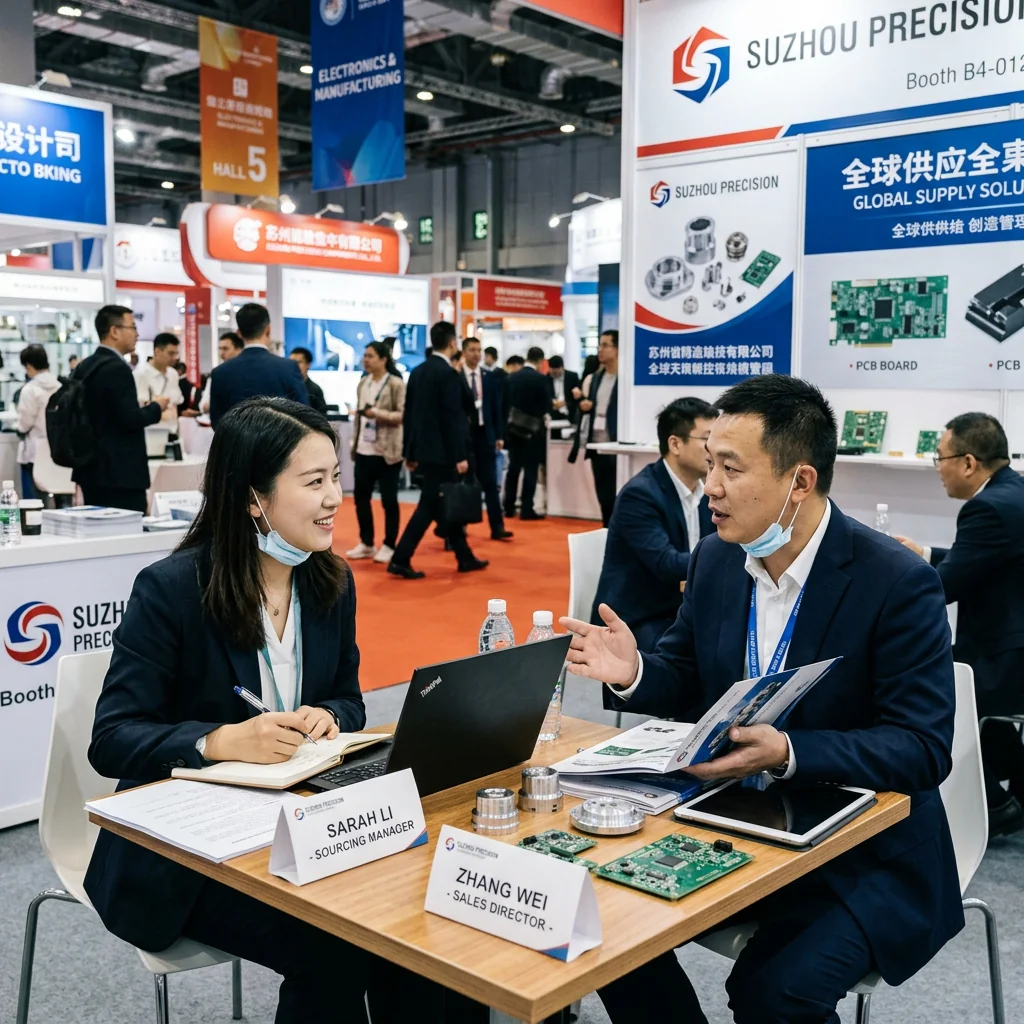
Trade fairs let buyers compare samples and discuss engineering requirements in person. Record the exhibitor legal entity and follow up on production capability and documentation after the meeting. Handling a display sample does not verify future bulk production.
Budget for travel, attendance and follow-up checks. A large booth is not evidence of product quality, and a suitable specialist manufacturer may not exhibit. Compare exhibitors with other supplier leads on the same verification checklist.
Factory websites and Chinese-language search
Chinese-language company websites can provide additional leads. Check whether the contact information, production address and product specifications are current; a basic or dated website is neither proof of capability nor evidence of low prices.
Search using Chinese industry and material terms alongside the English product name. Confirm the seller’s current export services and communication arrangements when requesting a quotation.
Referrals
A reference from another buyer can help assess a supplier. With the referring buyer’s permission, ask about comparable products, order dates, defects and how complaints were handled. A reference supplements product and company checks.
Ask a referring buyer which orders they have completed, what problems occurred and what evidence shows the resolution. Discuss a concrete example rather than relying on a general recommendation.
Reading the business licence
Ask for the company’s business licence and cross-check the registered entity through the relevant public registration service. Resolve inconsistent names, addresses or manufacturing claims before approving the supplier.
Check the registered entity name and unified social credit code against the registration record. Registered capital alone does not prove capacity or solvency. Compare the business scope with the role claimed in your contract and verify the production site. The legal representative identifies a registered person; it is not the name you should expect on a company bank account. Match the payment beneficiary to the contracting entity. If an export agent or another entity will receive payment, obtain and independently verify the written authorization and transaction documents before paying.
Inconsistent entity or beneficiary details may indicate an error, an undisclosed intermediary or payment diversion. Confirm discrepancies using contact details obtained independently. See the FBI guidance on business email compromise for payment-change verification.
Factory or trading company — and why the answer is not always "factory"
Buyers are told to find factories and avoid traders. That advice is too blunt.
A trading company may provide language support, supplier coordination, export documentation or consolidation. Ask for a disclosed margin or service fee and compare the included work with a direct factory quotation. Do not assume a fixed markup or that an intermediary necessarily delivers a better result.
Consider direct purchasing when you can manage the technical specification, supplier checks and export arrangements. For a multi-supplier order, compare the cost and responsibilities of a trader or sourcing agent with doing the coordination yourself.
Require clear disclosure of whether the counterparty is the manufacturer, an export agent or a trading company. Ask who controls production, who issues the invoice and who is responsible for defects; resolve any misrepresentation before committing funds.
What verification actually costs
Request a scoped quotation for registration checks, factory visits, audits and inspection. Compare auditor qualifications, location, travel, test scope, report contents and reinspection charges. A remote video call, a factory audit and a pre-shipment inspection answer different questions and should not be priced as interchangeable services.
A worked budget example—not a service quotation: if a buyer allocates USD 600 to checks on a USD 30,000 order, that is 2% of the order value; on a USD 3,000 order it is 20%. Use your own quotations and product risk to decide the checks. A small trial order limits exposure but does not remove the need to verify the counterparty or applicable product requirements.
When the marketplace is still the right tool
For standard catalogue goods, compare the platform’s current payment-protection terms, claim deadlines and covered transactions with your product specification and sampling plan. Check whether the proposed payment route qualifies. Do not treat an order-value threshold or an escrow label as a refund guarantee.
Custom products, repeat purchasing and products with material or compliance risks may justify additional verification. Select checks according to the potential loss, the specification and the evidence already available.
To request a scoped supplier review, send the licence copy, quotation, product specification, quantity and destination market through CZJ Sourcing’s enquiry form. State which claims you need checked and whether the supplier has requested any change to payment details.